
Do You Need a Crane to Install Palm Trees?

If you’re planning a palm installation, one of the first practical questions is simple: Do you need a crane to install palm trees? Sometimes yes, sometimes no. It depends on the palm’s size, the access to your property, the weight of the root ball, and how precisely the tree needs to be placed.
For many homeowners, the word crane makes the project sound bigger, more expensive, and more complicated than expected. In reality, a crane is just one tool. Some palm trees can be set with standard installation equipment, while others need lifting power to move safely over walls, pools, fences, roofs, or tight landscape areas without damaging the property or the tree.
Do You Need a Crane to Install Palm Trees? It Depends on Access
The biggest factor is not always height. A palm can be relatively modest in overall height and still require a crane if the installation spot is difficult to reach. If the planting area sits behind a house, inside a courtyard, or beyond existing hardscape, ground equipment may not be able to get close enough to place the tree correctly.
That is where a crane becomes useful. Instead of dragging or forcing a large palm through narrow access points, the crew can lift it up and over obstacles and lower it directly into the planting hole. That protects nearby structures, preserves finished landscaping, and reduces stress on the root system.
On the other hand, if the planting site has wide, open access and the palm is a manageable size, a skid steer, loader, or similar equipment may be all that is needed. That is common for smaller Areca Palms, Christmas Palm Triple groupings, and other material that is large enough to require equipment but not so large as to require overhead lifting.
Palm Size Matters, but So Does Root Ball Weight
People often judge a palm by the visible trunk and canopy, but installation crews pay close attention to the root ball. A tall palm with a heavy root ball can quickly become a lifting and balancing issue. The tree has to be moved safely, kept stable in transport, and lowered into place without damaging the trunk.
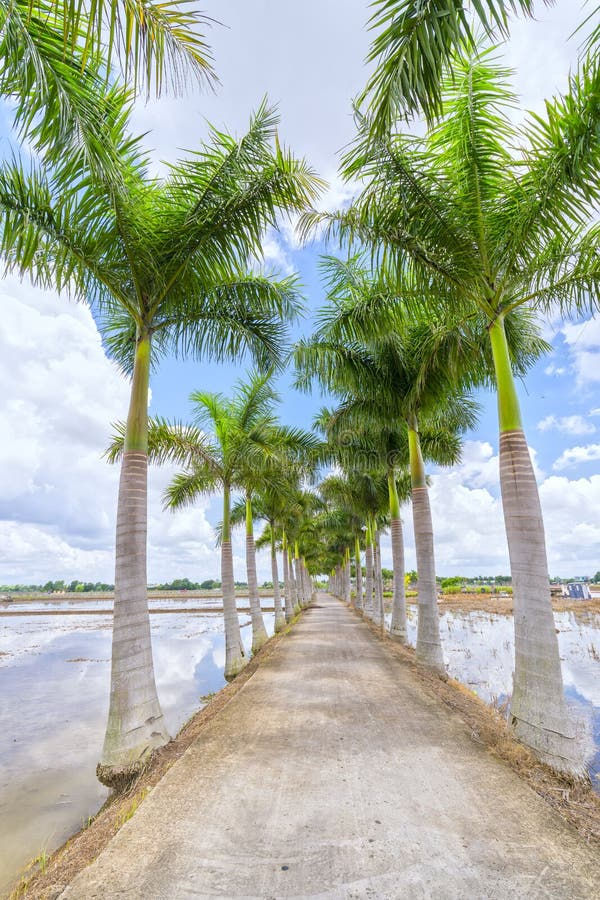
Larger specimens, such as mature Royal Palms, Canary Palms, or King Alexander Palms, often push the project into crane territory, especially when installed as statement trees. These palms are not just tall. They are substantial, and their size changes the type of equipment needed.
Smaller palms and clustered varieties can be more flexible. Foxtail Palms, Christmas Palms, and some field-grown tropicals may be installed without a crane if access is straightforward and the grade is favorable. But there is no universal rule based solely on species. Two palms of the same variety may need very different installation methods depending on their size and the site conditions.
When a crane is commonly needed
A crane is often the right call when the palm is very tall, the root ball is especially heavy, the planting area is behind obstacles, or the tree needs to be dropped into a precise location with very little room for error. Waterfront homes, pool decks, enclosed backyards, and commercial entries are common examples.

There is also a safety side to this. If a crew has to improvise to move a heavy palm through a tight site, the risk goes up. Using the right lifting method is not about making the job look impressive. It is about protecting people, property, and the plant material.
Site Conditions Often Decide the Equipment
A flat, open lot is very different from a finished property with pavers, irrigation, lighting, and established planting beds. The more complete the site is, the more care the installation requires. Heavy equipment on finished surfaces can create damage that becomes expensive to fix.
In many cases, a crane is chosen because it minimizes ground disruption. Instead of driving large machinery deep into the property, the palm can be lifted from the street or driveway and placed with less impact. That can be the cleaner option, even if it is not strictly the only option.
Florida properties add their own considerations. Soft ground, tight side yards, coastal exposure, and drainage conditions all affect how installation should be handled. If the ground is saturated or unstable, standard equipment may not perform well or safely. A crane can solve that access problem while keeping the operation more controlled.
Cost: A Crane Adds Expense, but It Can Prevent Bigger Problems
Yes, crane installation usually costs more than a standard plant set. There is specialized equipment, scheduling, and often more coordination involved. But the cheaper route is not always the better route.

If skipping a crane means damaged pavers, torn irrigation lines, scraped walls, or a poorly planted palm because the crew could not position it correctly, the project can end up costing more. Palm installation is one of those jobs where the right equipment up front often protects the overall budget.
This is especially true with high-value specimen palms. If you are investing in mature material for curb appeal, privacy, or a finished resort-style look, the install method should match the value of the plant. Saving on equipment only makes sense when the site truly allows for it.
How Professionals Decide If a Crane Is Necessary
The best answer usually comes from a site review. An experienced nursery and installation team will assess palm size, measure access points, evaluate overhead clearance, and determine how close delivery equipment can get to the planting area.
They will also look at the route from the truck to the hole. That sounds basic, but it matters. Gates, power lines, tree limbs, roof overhangs, slopes, septic areas, and decorative hardscape all affect the decision. A palm might fit on paper, but still be difficult to maneuver in real conditions.
At Santana & Plants, that kind of planning is part of making the process easier for customers. Instead of guessing whether a crane is needed, it is better to assess the property, choose the right palm for the space, and match the installation method to the site.
Signs your project may need a crane
If the palm is going into a backyard with no wide equipment path, if the tree is unusually tall or heavy, or if it must clear structures like a house, fence, or pool enclosure, there is a good chance a crane should be considered. The same goes for commercial properties, where placement must be exact, and the surrounding area must remain clean and undisturbed.
That does not automatically mean the job is difficult. It just means the project needs the right setup.
Choosing the Right Palm Can Change the Installation Plan
Sometimes the smartest move is not forcing a larger palm into a tight site. It may be choosing a different size or variety that still gives you the look you want without requiring more complicated logistics.
For example, a row of Areca Palms for privacy is a very different installation from placing a mature Royal Palm at the front entry. One project is about screening and spacing. The other is about scale and visual impact. Both can be excellent choices, but they have different equipment requirements.
That is why plant selection and installation planning should go hand in hand. The goal is not only to pick a beautiful palm. It is to pick one that fits your property, your timeline, and your budget in a practical way.
The Real Answer to Do You Need a Crane to Install Palm Trees?
The real answer is that you need a crane when the palm or the site makes standard installation unsafe, inefficient, or too rough on the property. You do not need one for every palm tree. But when access is limited or the material is large, a crane can be the safest and most effective option.
That is good news for buyers because it means the decision should be based on your specific project, not on a blanket rule. Some installs are straightforward. Others need more lift and more planning. A dependable supplier should be able to quickly identify the issue and guide you to the right approach.
If you are planning a new landscape or replacing damaged palms, the best next step is to have the site and plant size evaluated together. The right installation method should make the job easier, protect your property, and give your palms the best start once they are in the ground.
A palm installation should feel exciting, not uncertain. When the equipment matches the job, everything tends to go smoother from delivery to final placement.


Comments