
Japanese Fern Tree: A Refined, Low-Maintenance Shade Tree for Miami Homes & Commercial Landscapes

Updated: Oct 2
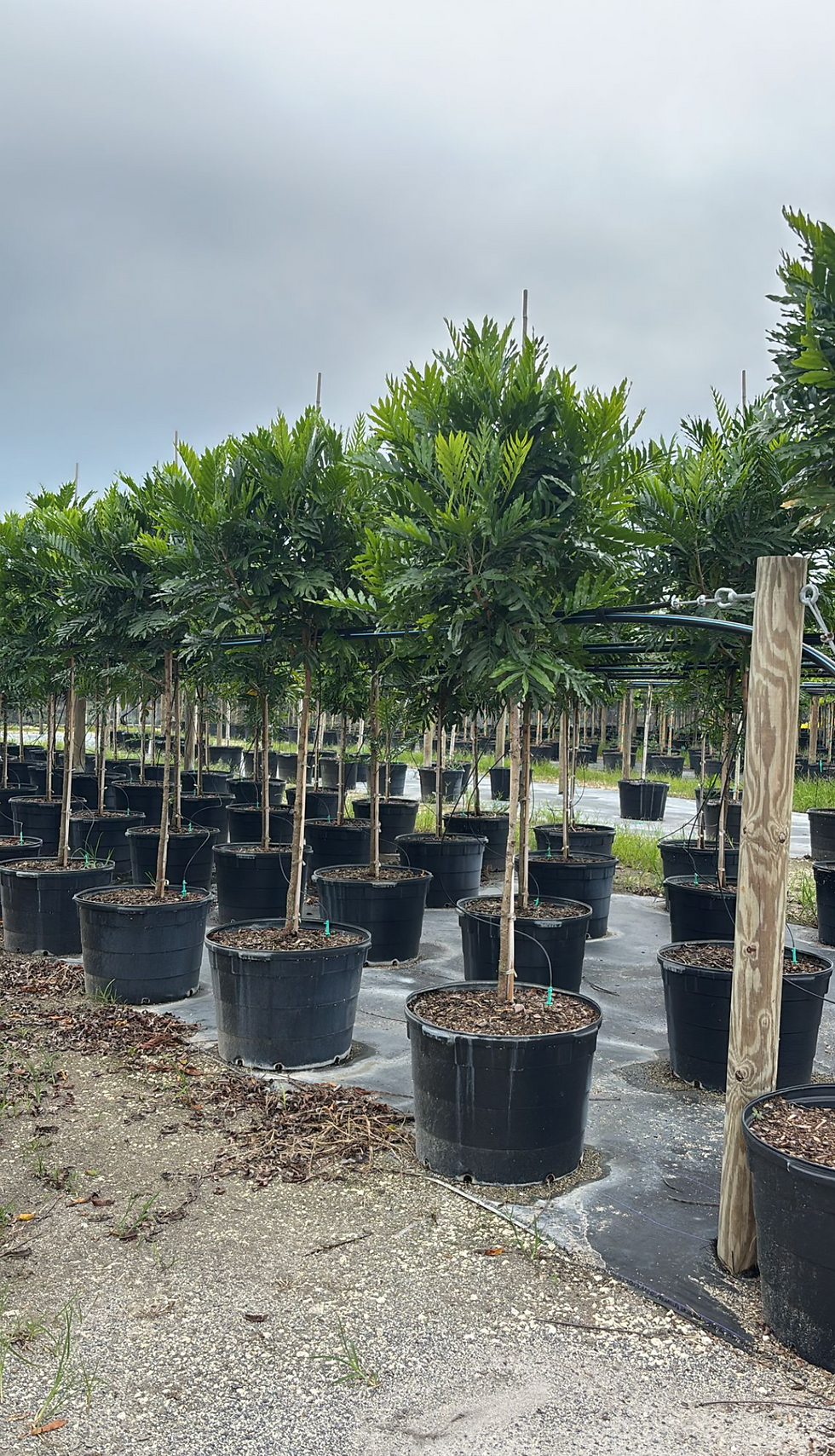
If you’re a South Florida homeowner, landscaper, or property developer looking for a compact and elegant shade tree that’s easy to maintain, the Japanese Fern Tree (Filicium decipiens) is a great option. Its fine-textured leaves and rounded canopy bring a touch of sophistication and structure to any landscape, whether it’s residential or commercial.
At Santana & Plants Corp, we grow and supply premium Japanese Fern Trees that are well-rooted, beautifully shaped, and ready for installation. With free delivery available across most of Florida, adding this unique ornamental tree to your Miami landscape is convenient and cost-effective.

What Makes the Japanese Fern Tree Ideal for Miami Landscapes
The Japanese Fern Tree isn’t actually a fern, but it’s named for its delicate, fern-like leaves. Its full canopy and compact size make it perfect for city and suburban yards that need shade without the hassle of lots of falling leaves or aggressive roots.
Key Benefits
1. Clean, Neat, and Low-Maintenance
Non-invasive root system
Minimal leaf drop
Pest resistance
Predictable, manageable size
Many Miami homeowners prefer it over messy, fast-growing shade trees.
2. Perfect Size for Residential and Commercial Properties
The Japanese Fern Tree usually grows to about 15 to 25 feet tall, giving plenty of shade and visual appeal without taking over your yard. It’s an excellent fit for:
Small yards
Driveway borders
Courtyards
Office buildings
Multi-family housing communities
It provides shade and greenery but won’t interfere with power lines.
3. Naturally Rounded Canopy
This tree’s rounded, even canopy gives your yard a neat, stylish look. Its thick leaves let sunlight through, adding a tropical yet tidy touch to any landscape.
4. Heat and Sun Tolerance
The Japanese Fern Tree does well in Miami’s climate and grows best in:
Full sun
Partial shade
High humidity
Coastal environments
It stays a deep green all year long.
5. One of the Best Street Trees for South Florida
Thanks to its size, strength, and roots that don’t spread too much, people often use it for:
Streetscapes
Parking lot islands
Commercial entryways
Urban developments
Its small, neat canopy gives you shade without making a mess.

Care Guide for Japanese Fern Trees in Miami, Fl
Sunlight
Prefers full sun to partial shade
If you plant it in full sun, you’ll get the thickest, most compact canopy.
Newly planted (first 2–3 months):
Water deeply 2–3 times per week
After establishment:
Water once per week, or adjust based on rainfall
Once established, it can handle dry spells very well.
Soil Requirements
Thrives in:
Well-drained soil
Sandy or limestone-based Miami soils
Locations with moderate irrigation
Please don’t plant it in spots that stay wet or swampy.
Fertilization
Use a balanced, slow-release fertilizer two or three times a year to help it grow well and keep its leaves looking good.
Pruning
You won’t need to prune much. Most people just:
Lift the canopy slightly as the tree matures.
Remove dead or crossing branches as needed.
Its round shape means you hardly need to trim it.
Best Landscape Uses for the Japanese Fern Tree
Residential Applications
Shade for patios and seating areas
Driveways and front yards
Garden focal points
Poolside landscaping (clean, minimal debris)
Property borders
Commercial and Public Spaces
Shopping center walkways
Office parks and business fronts
HOA and community entrances
Parking lot islands
Streets and median strips
Because it looks tidy and doesn’t get too big, this is one of the most versatile ornamental trees you can choose.
Complementary Plants, Palms, and Trees for the Japanese Fern Tree
The Japanese fern tree (Filicium decipiens) features soft, finely textured foliage and performs best in warm, subtropical climates with partial sun to light shade. It pairs well with plants that either contrast its delicate leaf structure or reinforce a layered tropical landscape design.
The following plant selections are commonly used alongside Japanese fern trees in high-end residential, commercial, and HOA landscapes.
Complementary Trees
These trees provide structure and balance without competing with the fern tree’s canopy.
Broad, glossy leaves create a strong contrast.
Commonly used as hedging or background screening.
Podocarpus
Upright growth habit complements the rounded form of the fern tree.
Suitable for formal or modern landscape designs
Live Oak (used selectively)
Adds long-term canopy structure when properly spaced
Best positioned as a distant backdrop element
Black Olive ‘Shady Lady’
Graceful branching structure
Works well in refined residential and commercial landscapes
Complementary Palms
Palms introduce height and vertical interest while maintaining a tropical aesthetic.
Adonidia (Christmas Palm)
Compact canopy and clean trunk
Effective for framing walkways and entrances
Soft, plume-like fronds echo the fern tree’s delicate texture.
Popular in upscale tropical designs
Ideal for privacy screening and mass plantings
Adds fullness at mid-height
Montgomery Palm
Taller palm option that provides vertical layering
Does not overpower the fern tree visually
Complementary Shrubs and Accent Plants
These plants enhance color, texture, and visual interest at eye level.
Croton
Bold foliage introduces a strong color contrast.
Performs best in filtered sunlight
Cordyline (Ti Plant)
Dramatic red and purple tones
Effective as a focal accent plant
Philodendron ‘Xanadu’
Rounded, architectural form
Low-maintenance and shade-tolerant
Ficus ‘Green Island’
Clean, manicured appearance
Well-suited for commercial and modern landscapes
Groundcovers and Understory Plants
These plants work well beneath or around Japanese fern trees.
Liriope
Durable and low maintenance
Commonly used for borders and mass plantings.
Dwarf Mondo Grass
Fine texture and refined appearance
Ideal for minimalist or high-end landscapes
Asiatic Jasmine
Dense ground coverage
Tolerates shade and moderate foot traffic
Caladiums
Seasonal color option for shaded areas
Adds interest without competing for height
Design Considerations
Japanese fern trees are most effective when:
Paired with broad-leaf plants for visual contrast
Supported by vertical palms to create layered height
Anchored by clean hedges or structured plantings
They are frequently used in:
Entryways and courtyards
HOA and commercial landscapes
Poolside and patio areas
Tropical-modern landscape designs
How Much Do Japanese Fern Trees Cost?
Many Factors Can Influence the Price of a Japanese Fern Tree
1. Species & Plant Type
True “Japanese fern trees” (e.g., Filicium decipiens) are evergreen trees with fern-like foliage and cost significantly more than small ornamental ferns like Athyrium niponicum (“Japanese Painted Fern”), which are herbaceous and much smaller. Sunshine Property+1
2. Size & Age
Larger, older specimens (especially container sizes like 30 gal or 45 gal) are more expensive because more time and resources have been invested in their growth. Meyers Turf+1
3. Container Size / Nursery Grade
Plants sold in larger pots (e.g., 25 gal, 30 gal, 45 gal) cost more than small nursery stock or saplings. Size often correlates with immediate impact in your landscape and transportation/handling costs. Sunshine Property+1
4. Availability & Local Climate
Some regions don’t naturally support a given species (e.g., Filicium decipiens prefers warmer climates), so shipping and acclimatization can bump prices. Nurseries shipping out of a delivery zone may add costs. Sejahtera Seeds and Bulbs
5. Nursery / Vendor Pricing Strategy
Retailers vary widely in markup depending on labor, overhead, and how rare the tree is in that market. Local garden centers may charge different prices than online suppliers. Seasonal demand also plays a role.
6. Health & Quality
A well-rooted, healthy plant with vigorous growth generally commands a higher price. Premium cultivation practices (fertilization, pruning, container quality) also factor into cost.
Japanese Fern Tree Price Estimates & Range
Japanese Fern Tree (Filicium decipiens / “fern tree”)
A Japanese Fern Tree can cost anywhere between $90 – $500+, depending on size and supplier. The average cost for one 25-gal Japanese Fern Tree is around $350-$400. Very large or mature landscape specimens (e.g., 45 gal and up) may exceed this range (e.g., ~$495 +). But at Santana & Plants Corp, our price averages $175 for a nice-sized 25-gal and $325 for a 45-gal. You won't find better prices on Japanese Fern Trees!
Why Buy Your Japanese Fern Tree From Santana & Plants Corp?
Santana & Plants Corp is a trusted Miami supplier and wholesale nursery of top-quality ornamental trees for landscapers, homeowners, and commercial projects. Please view our complete available Plant List for inventory and prices.
What You Can Expect
Healthy, well-shaped Japanese Fern Trees
Locally grown and acclimated to Florida’s climate
Competitive wholesale pricing
Free delivery across most of Florida
Large inventory for big projects
Expert recommendations for planting and care
We focus on providing vigorous, attractive plants that do well in South Florida.
Order Your Japanese Fern Tree Today
Get in touch with Santana & Plants Corp today to see what’s in stock and set up free delivery in most of Florida.


Comments