
Privacy Hedges That Actually Work in Florida

A good privacy screen changes how a property feels. One row of the right plants can block an unwanted view, soften noise, add structure to the yard, and make outdoor space more comfortable without the look of a hard fence. That is why privacy hedges are one of the most requested landscape upgrades for homeowners, property managers, and contractors across Florida.

The part that trips people up is not whether a hedge is useful. It is choosing one that actually performs well in the site you have. Sun exposure, mature width, soil drainage, maintenance expectations, and how quickly you want coverage all matter. The best privacy hedge is not always the fastest grower or the tallest plant on the lot. It is the one that fits the property and keeps looking good after the install is done.
What makes privacy hedges work well
A strong hedge does more than grow tall. It needs enough density to create real screening at eye level, not just at the top. It also needs to respond well to pruning if you want a clean, formal line, or hold a naturally full shape if you prefer a softer look.
In Florida, durability matters just as much as appearance. Heat, heavy rain, sandy soils, and seasonal wind can expose weak plant choices quickly. A hedge that looks great in a container or on delivery day can become thin, uneven, or stressed if it is planted in the wrong conditions. That is why mature size and site match should come first, even before color or growth rate.
There is also a practical side to privacy. Some properties need fast screening for a pool edge, a side yard, or a commercial boundary. Others need a polished front-facing hedge that supports curb appeal. Those are different jobs, and they do not always call for the same plant.
Best privacy hedges for Florida landscapes

Clusia remains one of the most dependable choices for privacy in Florida landscapes. It is popular for good reason. It develops thick foliage, creates a substantial screen, and handles pruning well when a more controlled look is needed. For customers who want a hedge that feels clean, modern, and substantial, Clusia is often a strong fit.
Podocarpus is another reliable option, especially when the goal is a more refined, upright hedge. Its texture is softer and more elegant than some broadleaf screening plants, and it can be maintained in a tailored shape without looking harsh. It works well along property lines, around courtyards, and in places where a narrower footprint matters.
Areca palms are often used as a living privacy wall rather than a traditional clipped hedge. They create height and a tropical look quickly, which makes them appealing for backyards and pool areas. The trade-off is that they do not give the same solid, manicured face as Clusia or Podocarpus. If you want movement, softness, and a more natural screen, they can be an excellent choice.
For some projects, mixed screening works better than a single-species hedge. A property with larger side setbacks or a layered design may benefit from combining palms, shrubs, and ornamental trees to create privacy with more visual depth. That approach is less formal, but it can look more natural and can help break up long, flat runs of greenery.
Choosing privacy hedges based on the job
If your main priority is dense coverage, broadleaf plants usually make the most sense. They fill in visually from the ground up and can hide neighboring structures, equipment, or fencing more effectively. Clusia is often chosen for this reason, particularly where immediate visual separation matters.
If your site is tighter and you cannot give up too much width, Podocarpus may be the better answer. Many property owners focus only on height, then realize later the hedge is crowding walkways, driveways, or utility areas. A narrower plant can save space without giving up privacy.
If you want a tropical feel around outdoor living areas, palms may fit the design better than a formal hedge. Areca palms can create a relaxed screen that feels appropriate for Florida and works especially well where the landscape is meant to feel lush rather than structured.
This is where a lot of projects become site-specific. A backyard privacy screen, a front property border, and a commercial perimeter do not carry the same expectations. Some spaces need a crisp line. Others need speed. Others need a low-maintenance plant that can handle inconsistent care. The right recommendation depends on which of those matters most.
Spacing matters more than most people expect

Even strong privacy hedges fail when spacing is off. Plants set too far apart leave gaps that take longer to close. Plants set too close may fill in fast, but they can compete for light, water, and nutrients as they mature. That often leads to thinning, disease pressure, or constant pruning to keep the row under control.
Spacing should be based on the plant variety, the installed size, and the final look you want. A tighter initial spacing may make sense if immediate screening is the priority and the hedge will be actively maintained. Wider spacing can work if there is patience for fill-in time and room for mature growth.
This is one reason professional planning pays off. It is not just about putting plants in a line. The hedge needs to finish evenly across the whole run, including corners, gates, and transitions near structures. A clean result depends on layout as much as plant quality.
Sun, soil, and drainage can change the recommendation
Florida gives you strong growing conditions, but not every site behaves the same way. Full sun, reflected heat, low spots that stay wet, and coastal exposure can all affect how a hedge performs. A plant that thrives on one property may struggle a few miles away if the drainage or sun pattern is different.
That is why broad advice only goes so far. Clusia, Podocarpus, and Areca palms are all proven choices, but each has ideal conditions where it performs best. When screening plants are matched correctly to the site, they establish faster and need less correction later.
Drainage is especially important. Privacy hedges are a long-term investment, and root health drives everything from growth rate to foliage density. If the planting area holds too much water, even healthy nursery stock can decline. In drier sandy areas, the issue may be the opposite. New plantings can dry out faster than expected and need a careful watering plan during establishment.
Maintenance expectations should be clear from the start
Some buyers want a hedge they can shape tightly and keep uniform. Others want privacy without frequent trimming. Neither approach is wrong, but the plant choice should match the maintenance plan.
Clusia and Podocarpus both respond well when a hedge needs to stay defined. That makes them useful for formal edges and high-visibility areas. Areca palms generally ask for a different style of care. They are less about clipping a wall-flat face and more about managing overall fullness and keeping the planting healthy and balanced.
Growth rate also comes with trade-offs. Fast-growing plants can solve a short-term screening problem sooner, but they usually bring more pruning and more frequent maintenance. Slower or steadier growers may take longer to close in, yet often give a neater long-term result. For many properties, the best choice is not the fastest one. It is the one the owner can realistically maintain.
Installation quality affects the final result
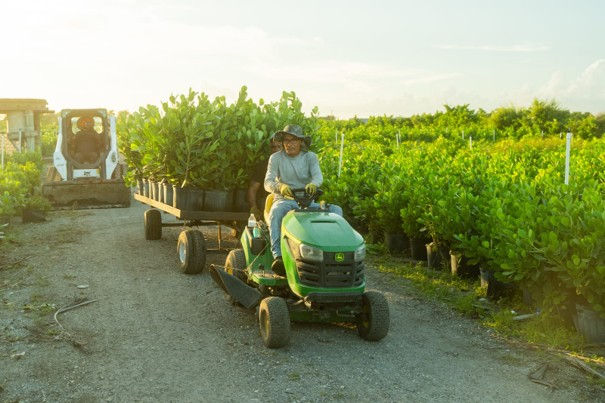
Plant selection gets most of the attention, but installation is where the project either comes together or starts with avoidable setbacks. Grade, spacing, alignment, soil prep, and initial watering all shape how a hedge establishes. A row that is slightly uneven on day one will usually look more uneven a year later.
Larger privacy hedges also need to be handled carefully during delivery and planting. Root balls, trunk stability, and consistent planting depth matter. When each plant is set correctly and the line is installed with a clear plan, the screen develops more evenly and looks intentional from the start.
For property owners and trade buyers, that is often the real value of working with an experienced nursery and installation team. It reduces guesswork and keeps the project moving without having to source plants, coordinate delivery, and solve layout issues separately.
When to plant privacy hedges
In Florida, privacy hedges can be installed during much of the year, but timing still affects establishment. Warmer months support active growth, which can help plants fill in sooner, though heat and rain patterns may require closer attention early on. Cooler periods can also work well, especially when the goal is to give roots time to establish before peak growing season.
What matters most is preparation and aftercare. Even the best privacy hedge needs the right start. That means planting at proper depth, watering consistently during establishment, and monitoring for signs of stress before small issues become larger ones.
A well-chosen hedge should make life easier, not create another problem to manage. If you start with the right plant for the space, give it proper spacing, and install it with care, you get more than privacy. You get a landscape feature that looks finished, adds value, and keeps earning its place year after year.


Comments