
How to Choose Tropical Shrubs That Actually Work in Florida Yards

A tropical shrub can look perfect at the nursery and completely miss the mark once it is planted. That usually happens when people focus on color or fullness first and ask the harder questions later. If you are figuring out how to choose tropical shrubs, the best results come from matching the plant to the job, the space, and Florida’s growing conditions before you buy.

That sounds simple, but it is where most landscape problems start. A shrub that grows too wide can crowd a walkway within a year. A privacy hedge planted in the wrong light may stay thin. A low-maintenance front entry planting can turn into a trimming chore if the mature size was not part of the decision. Good shrub selection saves time, replacement costs, and frustration.
Start with the job the shrub needs to do
Before comparing varieties, define the purpose. Tropical shrubs are not interchangeable. Some are best for screening, some create structure around a home, and some are planted mainly for texture or seasonal color. When the purpose is clear, the field gets much narrower.
If you need privacy, dense growers with reliable branching matter more than flashy foliage. Clusia is a common choice because it can form a substantial screen and hold a clean look with regular maintenance. Podocarpus works well when you want a more refined, upright hedge. If the goal is foundation planting, you may want a shrub that stays proportionate near windows and entry paths instead of one that is always pushing beyond the bed.
For commercial properties or larger residential lots, scale becomes even more important. A small ornamental shrub can disappear against a long wall or broad frontage, while a large hedge plant may overwhelm a compact courtyard. Start with the visual role, then move to growing conditions.
How to choose tropical shrubs based on your site
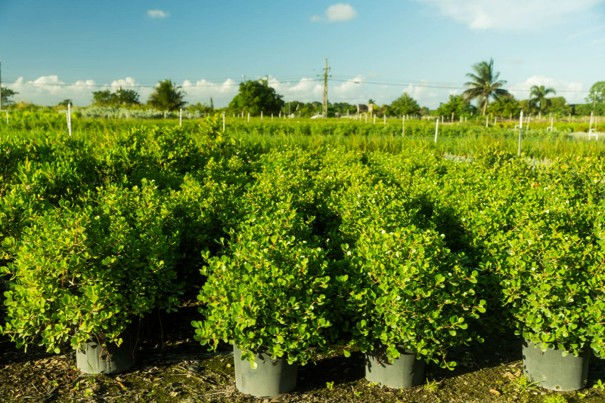
The right shrub for one area of the yard may be the wrong one ten feet away. Light, drainage, wind exposure, and spacing all affect performance. In Florida landscapes, this matters as much as the plant itself.
Check sun exposure honestly.
Many planting mistakes begin with overestimating the amount of sunlight. A spot that gets bright light all day is not the same as full sun. A space shaded by a fence in the morning and a roofline in the afternoon may only get a few usable hours.
Some tropical shrubs tolerate part shade well, while others become sparse or leggy without enough direct sun. If you want dense growth for screening, light levels are especially important. Thin growth is often a site issue, not a plant quality issue.
Spend a day observing the area if you are unsure. It is better to choose a shrub that naturally fits the light than to fight the plant with extra trimming and replacement later.
Pay attention to drainage.
South Florida landscapes can have sandy soils, fill soil, compacted areas, or spots that stay wet after heavy rain. Tropical shrubs generally like warmth, but not all of them handle wet feet the same way.
If water stands in the planting area, choose with extra care. Root problems often show up slowly, and by the time a shrub declines, the original drainage issue has already done the damage. In raised beds or well-draining sites, you have more flexibility. In lower or poorly drained areas, plant choice should be more conservative.
Measure for mature size, not delivery size
This is one of the most important parts of how to choose tropical shrubs and one of the easiest to overlook. Buyers often shop by current appearance because that is what is in front of them. But the plant’s mature height and width should drive the decision.
A shrub that arrives neat and narrow can become too large for the bed, forcing constant pruning. That repeated shearing can also change the plant’s natural form and make it look less healthy over time. On the other hand, planting undersized shrubs for a privacy line can leave gaps longer than expected.
Look at fences, windows, rooflines, pool decks, and property lines. Give the shrub room to grow into its intended shape. If the space is tight, a naturally compact shrub is usually a better answer than a larger one that will need to be cut back forever.
Choose the look you want to maintain
Not every beautiful landscape is low maintenance, and not every low-maintenance landscape gives the same visual effect. Be honest about how polished you want the finished project to look and how often you are willing to trim, feed, and monitor it.
A formal hedge requires consistency. If you want sharp lines and a manicured finish, select shrubs that respond well to shaping and have dense branching. If you prefer a softer, more natural tropical look, choose varieties that hold an attractive form without frequent cutting.
Leaf size also changes the overall feel. Large leaves can create a bold tropical appearance, but they may read heavier in smaller spaces. Finer-textured shrubs often look cleaner and more tailored near entryways, driveways, and modern homes. There is no single right answer here. It depends on the style of the property and the maintenance plan.
Privacy, curb appeal, and traffic flow
Homeowners and property managers often want one shrub to solve several problems at once. Sometimes that works. Sometimes it creates compromise.
For example, a shrub planted for privacy near a patio may need height and density, but if it sits beside a gate or driveway, it also has to preserve access and sightlines. A shrub chosen mainly for curb appeal in the front yard may need to stay lower so it does not block windows or make the house feel closed in.
That is why layout matters as much as plant selection. The same shrub can perform very differently depending on spacing and placement. A plant that works beautifully along a rear property line may be a poor choice near a walkway simply because of how it grows over time.
Think beyond the first year
Many landscapes look finished on installation day but become harder to manage after a few growing seasons. Tropical shrubs in Florida can establish quickly, which is great when you want fast results, but it also means growth habits show up fast.
Ask what the planting should look like in two to three years, not just in the first few months. If the answer involves aggressive pruning, root crowding, or blocking irrigation access, the original choice may need to be adjusted.
Common tropical shrub choices and when they fit

Some shrubs show up again and again in Florida projects because they solve common landscape needs well. Clusia is often selected for privacy and screening because it develops into a thick, substantial hedge. Podocarpus is a strong option when you want a more vertical, structured look with a cleaner profile.
Other tropical shrubs may be better suited for accent planting, layered beds, or softer borders rather than full screening. That is where an experienced nursery team can help narrow options based on your exact site. The right answer depends on whether you need a hedge, a backdrop, a low border, or a statement planting around palms and ornamental trees.
This is also where plant quality matters. A healthy, well-grown shrub with a strong root system establishes more predictably than plant material that was rushed or poorly handled. Reliable sourcing makes a difference, especially on larger installs where consistency across the row is important.
How to choose tropical shrubs without overbuying or underplanting
There is always a balance between immediate impact and long-term spacing. Plant too tightly, and the shrubs can compete, forcing more pruning and reducing airflow. Plant too far apart and the bed may look unfinished for longer than you want.
For privacy hedges, spacing should reflect the mature width and growth habit of the specific variety, not a generic rule. For ornamental groupings, you may want a little more room so each plant keeps its individual form. In larger projects, getting spacing right from the start can prevent expensive corrections later.
If you are unsure, it helps to work backward from the finished look. Do you want a solid screen, a layered tropical border, or clean architectural lines? Once that is clear, plant size and spacing become easier decisions.
When expert guidance makes the process easier
Choosing shrubs sounds straightforward until you are comparing sun conditions, mature sizes, hedge goals, availability, delivery timing, and installation logistics all at once. That is often the point where projects stall or buyers settle for what is easiest to get instead of what fits best.
For homeowners, contractors, and property managers, practical guidance can save a lot of wasted effort. A knowledgeable supplier can help match shrub varieties to your site, recommend appropriate sizes, and keep the project moving with delivery and installation support when needed. That kind of help is especially useful when the goal is not just to buy plants, but to get the landscape right the first time.
The best tropical shrubs are not always the most eye-catching ones in the row. They are the ones that still make sense after the weather changes, the roots settle in, and the landscape starts doing what it is supposed to do.


Comments