
How Long Do Palms and Trees Establish in Miami?

A newly installed palm can look settled on day one and still be weeks away from truly taking hold. That is usually the biggest source of confusion behind the question, How long do palms and trees take to establish in Miami? The short answer is that most palms and trees need several months to take root and closer to a full growing season to feel established. The exact timeline depends on plant type, size at installation, soil drainage, irrigation, weather, and how the plant was handled before it ever reached your property.
In Miami, that timeline can move faster than it does in colder climates because warmth supports active growth for much of the year. But heat, sandy soil, wind, and heavy summer rain can also work against a new installation if watering and planting depth are off. A palm or tree can survive the first month and still struggle later if the root zone never stabilizes.
How long do palms and trees take to establish in Miami?
For most landscape projects, a reasonable working timeline is about 3 to 6 months for initial establishment and 6 to 12 months for stronger, more reliable rooting. Larger specimen trees can take longer. Smaller material often settles in faster, especially when planted during the warm, rainy season and given consistent aftercare.
Palms are a little different from shade and ornamental trees. Many palms do not branch out with the same kind of woody root structure people expect from broad-canopy trees. Instead, they regenerate roots from the root initiation zone near the base of the trunk. That means a transplanted palm may spend an early period looking almost unchanged above ground while it focuses on rebuilding roots below ground. During that stage, the top may not push much visible growth, even though the plant is doing exactly what it should.

Trees often show transplant stress more visibly. Leaf drop, slowed canopy growth, and minor thinning are common while roots shift from container or field conditions into the surrounding soil. In Miami, a healthy installed tree may begin active new growth within a few months, but full establishment still takes time.
What does establishment really mean

A plant is considered established when its roots have extended far enough into the surrounding soil to support normal water uptake and steady growth without constant intervention. That does not mean zero maintenance. It means the plant is no longer relying almost entirely on the original root ball.
This matters because many property owners judge success by appearance alone. A Royal Palm can remain upright and green for a while after installation, but if irrigation is inconsistent or drainage is poor, the roots may not expand as they need to. On the other hand, a tree that drops some leaves early on may still be progressing normally if the trunk is stable and new growth follows.
In practical terms, establishment is less about how the plant looks in the first two weeks and more about how it performs after the first few months.
Why do timelines vary so much in Miami
Miami gives tropical and subtropical material a strong climate advantage, but not every site behaves the same. Soil can be sandy in one yard and heavier or more compacted in another. Some properties drain fast. Others hold water around the root ball after every storm.
Plant size is one of the biggest factors. A smaller Foxtail Palm or Japanese Fern Tree usually establishes faster than a large specimen because it has less canopy to support and less transplant shock to overcome. Bigger material creates immediate impact, but it also demands more careful watering and monitoring.
Season matters too. Warm months generally support faster rooting, especially when natural rainfall helps maintain even moisture. Still, too much rain can become a problem if the planting hole acts like a basin. Winter installations in South Florida are still workable, but growth may be slower than in late spring or summer.
Installation quality makes a major difference. Planting too deep, damaging the root ball, burying the trunk flare on trees, or mounding too much soil against a palm trunk can delay establishment. The same is true when plants are moved, delivered, and set without enough attention to root condition and final grade.
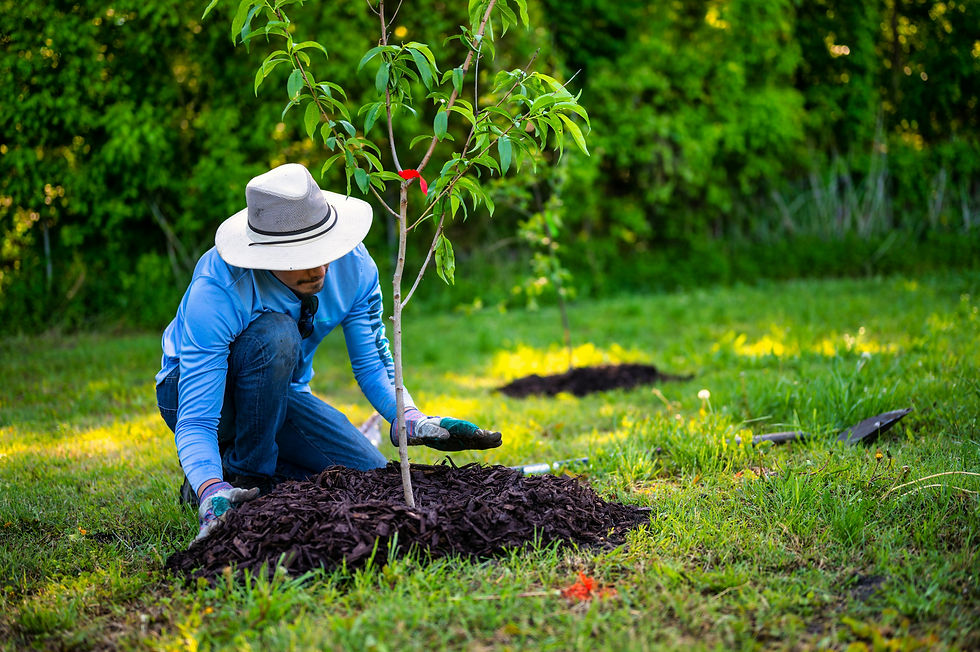
Palms vs. trees: what to expect
Palms
Palms often establish with a quieter topside response. A newly planted Areca Palm, Christmas Palm Triple, or Canary Palm may not show much fresh growth right away. That can be normal. Early energy often goes into root recovery.
With many palms, 3 to 6 months is a fair window for initial establishment under good conditions. Larger palms, especially field-grown specimens, can take longer. During that time, older fronds may decline while the center spear remains the main indicator to watch. If the spear is firm and the palm is staying hydrated, that is generally more encouraging than expecting a quick flush of new fronds.
Trees
Trees usually give more visible feedback. A newly planted ornamental or shade tree may wilt slightly, shed some leaves, or pause top growth after planting. In Miami, many healthy trees begin showing new growth within the first growing season, but stronger establishment often occurs at 6 to 12 months.
Broadleaf trees also respond more clearly to irrigation mistakes. Too little water can cause canopy stress fast. Too much can reduce oxygen around roots and create a decline that looks deceptively similar. That is one reason site-specific guidance matters.
Signs a plant is establishing well
The best signs are steady, not dramatic. On palms, look for a firm spear, stable trunk, and gradual healthy frond development. On trees, look for improved leaf color, normal leaf size, and new growth that matches the species and season.
You should also notice that the root ball starts to hold moisture more evenly. Early on, new installations can dry out quickly because roots are still concentrated in a limited space. As the plant establishes, water use becomes more evenly distributed, and the surrounding soil starts to play a larger role.
A plant that feels loose in the ground after several weeks, develops trunk rot, shows persistent yellowing across the canopy, or declines without any new growth may need a closer look.

The care that shortens or delays the establishment
Watering is the biggest variable. New palms and trees need regular moisture, but regular does not mean constant saturation. The goal is to keep the root ball evenly moist while encouraging roots to move outward. In Miami, rainfall can make people think irrigation is covered, but summer storms are not always enough to properly wet the root zone.
Mulch helps, especially in heat, by moderating soil temperature and slowing evaporation. It should be kept away from direct contact with the trunk. Fertilizer is another area where patience matters. Pushing heavy fertilizer too early can stress a plant that is still trying to rebuild roots. Once the plant has started settling in, a proper nutrition plan makes more sense.
Staking is useful when needed, but it should not become permanent. A tree that never gets a chance to sway slightly in the wind may grow more slowly because that gentle movement helps it develop strength. Palms are similar in that support should be functional rather than excessive.
How buyers can make better planting decisions
If the goal is quick visual impact, larger material can be worth it, but it should come with realistic expectations. Bigger does not always mean faster establishment. In many cases, moderate-sized palms and trees catch up more quickly because they adapt faster to the site.
It also helps to match the plant to the location rather than forcing a look that clashes with the property. A palm suited to full sun and fast drainage will establish more reliably than one that is constantly stressed by shade or wet feet. The same goes for privacy trees and ornamental trees placed too close to pavement, pools, or structures.
Working with a supplier that treats sourcing, transport, delivery, and installation as a single process can remove a lot of guesswork. At Santana & Plants, that practical side of the job matters because the establishment starts before the plant ever goes in the ground. The condition of the root ball, the timing of delivery, and the quality of installation all affect what happens in the months after planting.
If you are planning a new landscape or replacing struggling material, the better question is not just how fast it will look good. It is how well it will root, hold up, and grow from there. That is the difference between a plant that survives and one that truly settles in.


Comments